






 Oct 30,2026
 By admin
A market can remain orderly for several sessions and change character within a matter of minutes.
An unexpected inflation figure or a sudden geopolitical development can widen price ranges considerably. Levels which were respected throughout the day may begin breaking with little hesitation, while candles become larger and intraday reversals arrive much faster than usual.
This is what makes trading volatility particularly difficult.
The problem is not merely that price is moving more, but the behavior on which a familiar setup depends may also be changing.
A breakout which ordinarily receives steady follow-through can suddenly reverse. Whereas, a stop loss which previously gave a trade reasonable room may now sit inside ordinary market noise.
Consequently, some trading setups deserve considerably more caution once market volatility rises.
Here is a list of 5 key setups to better avoid during high market volatility:
1. Breakouts Triggered by the First Move Through a Level
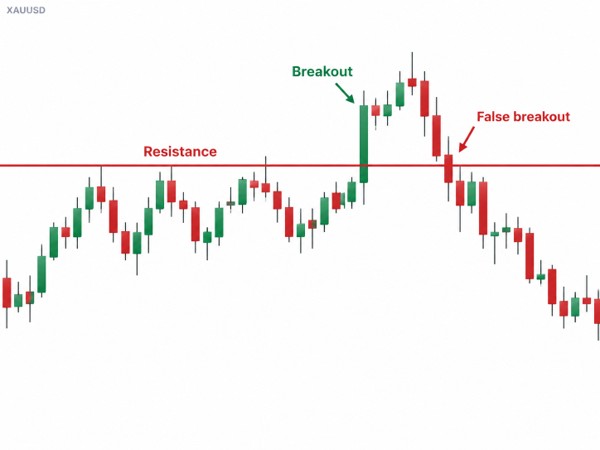
Breakout trading is commonly based on the idea that price leaving an established area can indicate a new directional move.
During quieter market conditions, a resistance or support level may be tested several times before price finally crosses it. The later breakout can then attract traders who expect the previous range to have ended.
High volatility changes the character of that movement.
Price can travel through a level rapidly without remaining there for very long. This is particularly common around economic releases, where large orders can enter within seconds and liquidity around the previous price area may temporarily become thinner.
Suppose XAUUSD has remained below resistance throughout the morning.
A stronger-than-expected economic release arrives and price quickly moves above the level. On the chart, the breakout is clearly visible.
What remains unclear is whether the market has actually accepted the higher price.
The first burst can consist largely of traders reacting to the announcement. Once those orders are absorbed, price may return towards the level or even fall back inside the earlier range.
This type of movement is generally referred to as a false breakout.
Interestingly, the speed of the move is often what makes the entry appear attractive in the first place.
The candle is large, the level has broken and momentum appears obvious. Yet during periods of elevated forex market volatility, that same speed can make the breakout considerably less reliable.
Waiting for additional evidence does not guarantee that the trade will succeed. It simply gives the market time to show whether the move has developed beyond the initial volatility burst.
A close beyond the level or a later retest may furnish more information than the first candle alone.
2. Trades That Need an Exceptionally Tight Stop Loss
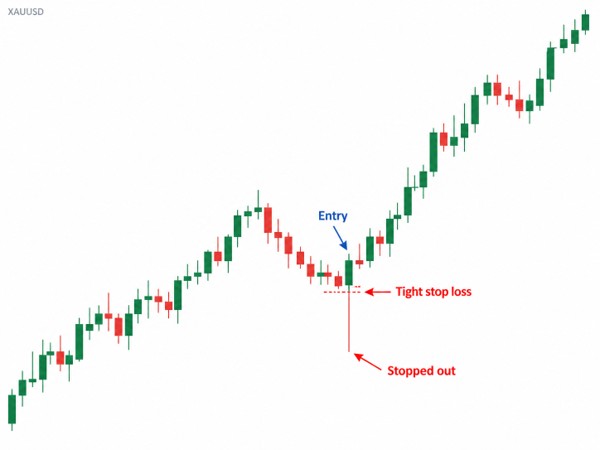
A small Stop Loss is often attractive because the amount at risk appears easier to control.
However, the distance between the entry and the stop has to bear some relation to ordinary market movement.
This becomes particularly important during trading during high volatility.
Suppose a currency pair normally fluctuates by several pips around an entry before moving in the expected direction. A five-pip stop may have been sufficient during those conditions.
Later on, volatility increases and similar candles begin travelling ten or fifteen pips within the same period.
The original stop has not suddenly become safer because it remains small.
It has simply moved closer to the market’s normal movement.
As an example, gold can spend part of a session moving within relatively narrow candles and become considerably more active once U.S. economic data are released. A Stop Loss which appeared perfectly reasonable an hour earlier can then be reached without the larger trading idea necessarily being invalidated.
This can lead to another problem.
A trader is stopped out, sees price return to the original direction and enters again with the same tight stop. If volatility continues, the process can repeat several times.
The individual losses may be small. Collectively, they are not.
The alternative is not simply to widen every stop.
A wider stop changes the amount at risk. If the trader wishes to retain the same monetary risk, the position size normally has to be reconsidered as well.
Therefore, the stop distance should not be separated from the conditions in which the trade is being taken.
3. Entries After Price Has Already Made the Main Move
Some trading opportunities become more attractive on the chart after they have become less attractive in practice.
A sharp directional move is a good example.
During periods of high volatility trading, price can travel a considerable distance before many traders have had time to evaluate what caused the movement.
Once the move is obvious, the temptation to enter becomes stronger.
Unfortunately, the original entry area may already be far behind.
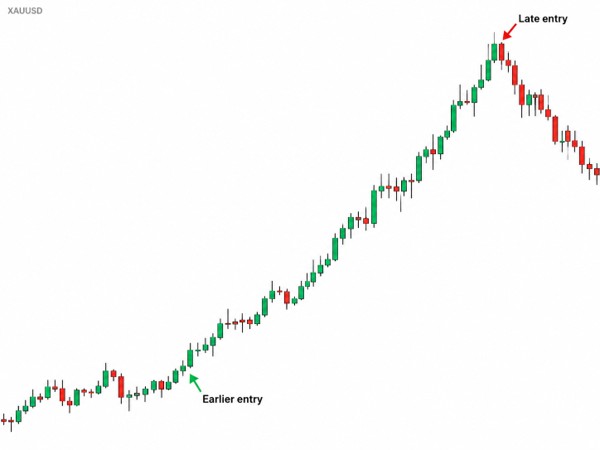
Suppose XAUUSD rises rapidly after weaker U.S. inflation data.
The first part of the move may be supported by a weaker dollar or changing expectations surrounding interest rates. A trader who enters near the beginning is participating while that reaction is still developing.
Someone entering much later is dealing with a different situation.
Price has already travelled further from the previous range, traders who entered earlier may begin taking profit and the market may start correcting part of the move.
The bullish explanation can remain valid while the late entry still performs poorly. This is one reason why chasing price becomes particularly problematic when market volatility is high.
The trader is not necessarily wrong about direction, but the difficulty is the price at which the trade is being taken.
Moreover, a late entry often leaves an awkward choice between using a very wide stop beneath the original setup or placing a tighter stop close to current price.
Neither decision repairs the fact that most of the initial movement has already occurred.
Sometimes another setup develops after the first reaction. Sometimes it does not.
The absence of a second entry does not make the late entry better.
4. Range Trades Just Before High-Impact News
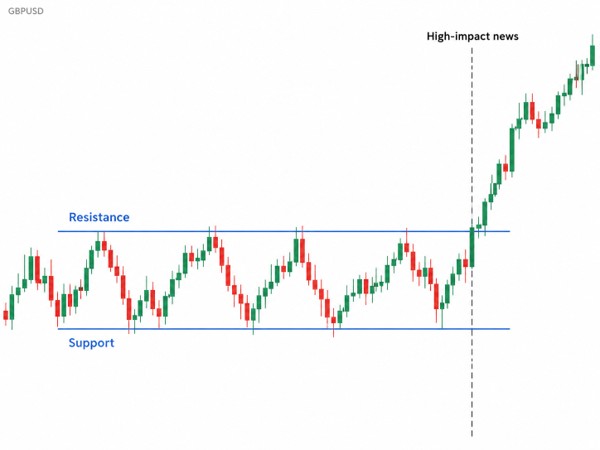
Range trading relies heavily on repetition.
Price moves towards one side of an established area, reverses and later approaches the opposite side. After several such movements, the upper and lower boundaries begin carrying more significance.
Under normal conditions, this structure can persist for hours or even days.
A major economic release can make the earlier behaviour considerably less relevant.
Consider GBPUSD trading inside a narrow morning range shortly before a Bank of England rate decision. Buying near support may have worked several times earlier in the session.
Once the policy announcement approaches, however, traders are waiting for new information which may alter expectations surrounding interest rates and the pound itself.
The range still exists on the chart. Its ability to contain price is another matter.
This becomes one of the more important trading setups to avoid around scheduled high-impact events because the technical structure was formed before the market received the new information.
If that information is significant enough, the assumptions behind the earlier range can change almost immediately.
Volatility can also increase before the announcement itself.
It means a trader should be cautious about assuming that a level formed under one set of conditions will retain exactly the same importance once those conditions change.
5. Normal Position Sizes Carried Into Abnormal Volatility
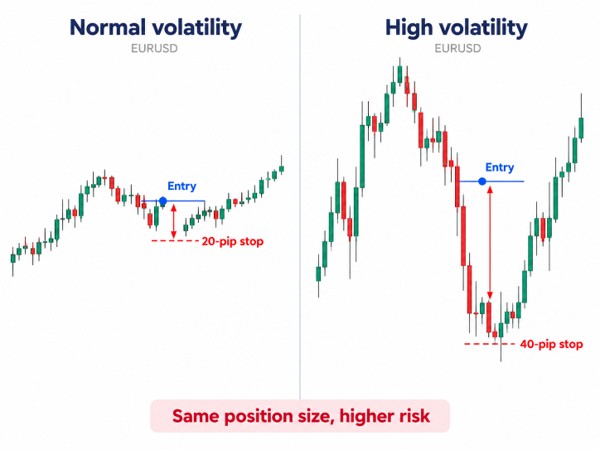
Position size is often selected from habit.
A trader who regularly uses the same lot size on EURUSD may begin to regard that exposure as normal. But the market does not know what the trader considers normal.
When price ranges expand, the same position size produces larger monetary fluctuations.
A trade which previously moved modestly against the account can begin creating much larger swings even though the number of lots has not changed.
This becomes particularly important when traders are considering high volatility trading strategies.
A setup may require a wider Stop Loss because ordinary price movement has increased. If the lot size remains unchanged at the same time, the amount of money at risk also increases.
The position can therefore become substantially more aggressive without the trader intentionally deciding to take greater risk.
For instance, suppose a trader normally uses a 20-pip stop with a particular position size. During a volatile session, the same setup requires 40 pips before the technical idea would genuinely be invalidated. Using the original lot size with the wider stop has effectively doubled the distance over which the position can lose money.
This is why position sizing and volatility should be considered together. The objective is not necessarily to trade the smallest possible position whenever markets become active. It is to prevent an increase in trading volatility from quietly becoming an increase in account risk as well.
What Changes When Volatility Rises: Bottom Line
The five setups above have one thing in common.
They depend on market behaviour which can become considerably different once price ranges expand.
| Setup | What High Volatility Can Change |
|---|---|
| Immediate breakout entry | Price may cross a level and reverse before the breakout is established |
| Very tight Stop Loss | Normal price movement may become large enough to trigger the stop |
| Late momentum entry | Much of the original move may already have occurred |
| Range trade before major news | New information can quickly invalidate the previous range |
| Normal position size | Larger price movement can increase monetary risk |
None of this means that a volatile market is automatically untradeable.
There are traders whose strategies are specifically intended for active conditions.
However, volatile market trading requires recognizing that a setup developed during quieter conditions may not retain the same characteristics after the market changes.